Category

WorkBuddy Handbook

A systematic WorkBuddy manual and open-source reference covering installation, Skills, Expert Panels, connectors, automation, and role-level adoption. 5 articles, each identifying its author, sources and public measurement basis.

Article List

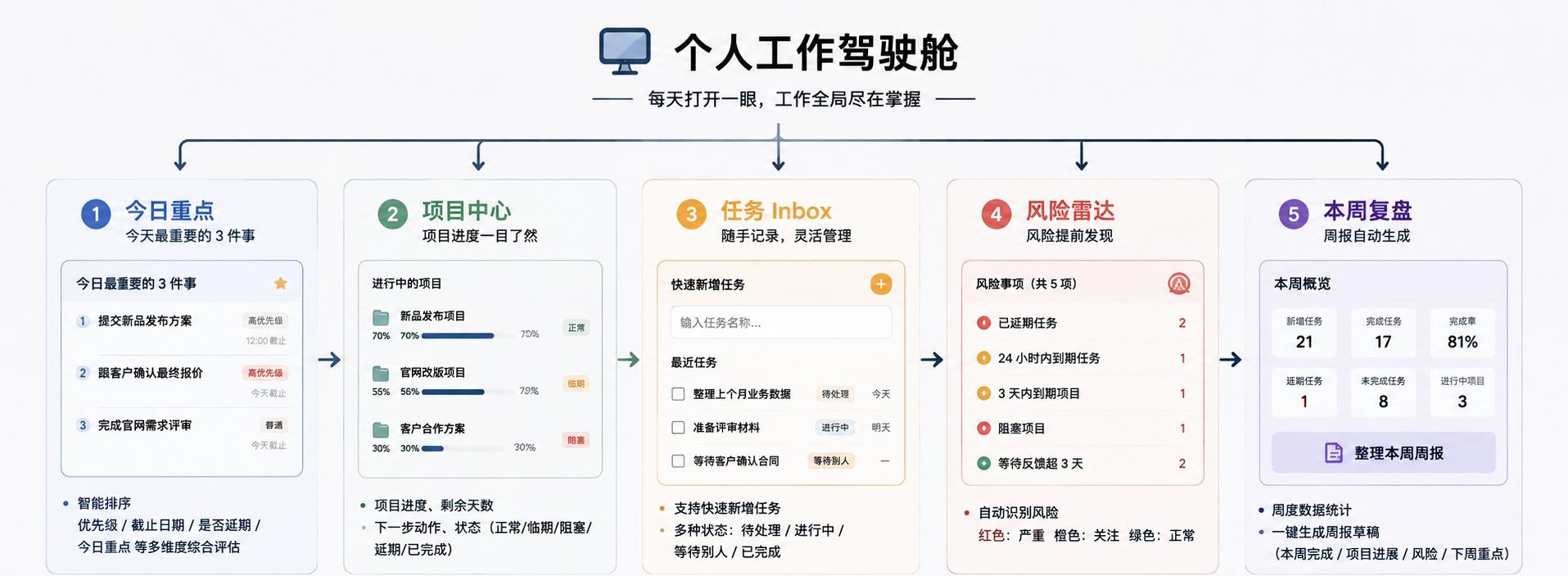
Using WorkBuddy's 'Personal Dashboard' to Build Your Own Work Management System from Scratch (Complete Tutorial)

Is the Todo List too simple and project management software too heavy? Try using WorkBuddy's 'Personal Dashboard' and Dashboard Builder to create a personalized 'cockpit' with prompts, featuring 'Today's Priorities + Project Center + Task Inbox + Risk Radar + Weekly Review'. This article includes the complete prompt and 18 practical screenshots.

Read full article →


How Can WorkBuddy Research Overseas Customers? Build a Customer Profile in 30 Minutes, Step by Step

Overseas customer research can be slow, fragmented, and inefficient. This guide shows you how to use WorkBuddy's Ask mode and its three-part prompting framework to consolidate customer information quickly and build a decision-ready customer profile in 30 minutes. It includes a practical prompt template, a mode selection guide, and a method for organizing the results into a customer profile table.

Read full article →

WorkBuddy Case Study: How Much Work Can One Salesperson Complete in a Day Using AI for Overseas Client Background Checks

This article demonstrates how to use the WorkBuddy AI tool for overseas B2B client background checks, comparing traditional methods with AI efficiency, providing prompt templates and real cases to help salespeople complete 10 client background check reports in a day.

Read full article →

The WorkBuddy Blue Book: A Complete 28-Chapter Guide from Installation to Role-Level Adoption

A task-led WorkBuddy handbook with 28 chapters, nearly 80,000 Chinese characters, and more than 260 interface screenshots. It covers installation and the first task, Skills, Expert Panels, connectors, Feishu and mini-app integration, office productivity, information aggregation, and multi-agent design.

Read full article →

Popular tags