China Content Operations and Advocacy
The value of a content platform is not only exposure; it is being found when a user searches. We combine Xiaohongshu, Douyin, Zhihu and everyday-user distribution: professional accounts build trust, creators add endorsement, everyday-user content occupies search results, and Zhihu supports rational decision-making. The result is a durable body of searchable content rather than a one-off campaign.

What Are Managed Content Operations?
Managed content operations mean a brand entrusts a specialist provider with account operation, content production, creator partnerships and data reviews across content platforms such as Xiaohongshu, Douyin, Zhihu and the Weixin ecosystem. The deliverable is not a number of published posts, but a body of searchable advocacy content: when target users search for category, scenario or problem terms inside the platform, they continue to see authentic content related to the brand. The critical effectiveness metric is brand coverage in search results, not exposure alone.
Why This Deserves Serious Attention
The mistake most brands make on Xiaohongshu is treating it as advertising inventory. Xiaohongshu is fundamentally a search tool. Users do not buy simply because a post appears in their feed; they first search questions such as 'how to choose X' and 'pitfalls of X'. Effective work begins by understanding what users search and ensuring your content appears under those terms.
Another mistake is focusing only on viral posts. A post with one million views but the wrong audience may be worth less than ten posts with ten thousand views whose comments all ask where to buy. Content marketing should measure mindshare and search coverage. Both grow slowly, but neither returns to zero when paid distribution stops.
4 Common Business Bottlenecks
Everything returns to zero when spending stops
When all reach depends on paid traffic, a budget cut produces an immediate collapse in exposure and enquiries, with no lasting asset accumulated.
The brand cannot be found in search
Users search category and problem terms, but the leading results contain only competitors and review accounts with no brand content.
The content does not sound human
Users recognise a product-introduction advertisement immediately, scroll past it and may even turn the comments negative.
The internal team cannot sustain production
Content operations require continuous output and rapid iteration, but internal teams often assign it as a part-time duty and cannot maintain stable updates or data-led work.
What We Deliver
Account positioning and persona design
Define the account's role on the platform, such as expert, founder, employee or user-experience account, and design its content themes and language so it does not become an indistinguishable official account.
Search-query library and content planning
Research real user searches and questions across five types: selection, price comparison, difference, pitfalls and local needs. Plan a content matrix so every important search has relevant content.
Professional account operations
Produce platform-native content continually, balancing search coverage with feed recommendations, controlling the publishing rhythm and iterating from performance data.
Creator partnerships and everyday-user distribution
Mid-tier creators provide scenario-based advocacy and endorsement, while everyday users expand search coverage. The latter are not intended to create viral posts; they make the search page show that many real people use the product.
Zhihu and search-platform decision support
Use Zhihu answers to reach users in the rational-decision stage. The answer format naturally serves high-intent search and combines with other platforms to cover the decision journey.
Data review and strategy iteration
Report monthly on content performance, changes in search coverage and enquiry attribution, then adjust the following month's direction and platform mix.
Deliverables
- Account-positioning plan and content themes
- Industry search-query library using five question types
- Monthly content calendar and produced content
- Creator and everyday-user partner list and content inventory
- Search-coverage and content-performance report
- Monthly strategy-iteration recommendations
Implementation Process
- 01
Current-state diagnosis
Review the brand's existing content assets, competitor content landscape and target users' search behaviour to find uncovered entry terms.
- 02
Positioning and planning
Define the account role and content themes, create the search-query library and content matrix, and set the objective for each content type.
- 03
Content production
Produce professional-account content continually while advancing creator and everyday-user partnerships, creating a structure of expert authority + creator trust + distributed volume.
- 04
Search-presence verification
Test target search-result pages inside the platforms regularly, verify brand coverage and fill weak terms.
- 05
Review and iteration
Use data to identify which content forms and terms deserve more investment and keep improving the platform mix.
Who It Fits
Good fit
- Mid- and higher-priced categories in which users research before deciding, such as home improvement, consumer products, education and local services
- Brands with genuine product strength or differentiation worth explaining through content
- Brands that want durable searchable content assets rather than one-off exposure
- Organisations without a stable internal content team or with insufficient content capacity
Not recommended
- Brands expecting immediate order growth as soon as content is distributed; content advocacy takes time and cannot promise instant conversion
- Products with experience problems and a weak reputation; content amplifies problems rather than concealing them
- Categories explicitly restricted by a platform, such as medical and financial products requiring special qualifications; we assess compliance first
Approach Comparison
| Role | Primary purpose | Content characteristics | Measurement |
|---|---|---|---|
| Professional account | Build expert trust and capture search traffic | Systematic, opinionated and cumulative over time | Search coverage, profile visits and enquiries |
| Creators (mid- and smaller-tier) | Scenario-based advocacy that borrows audience trust | Lifestyle-led, experiential and strongly native to the platform | Engagement rate and incremental search driven by the content |
| Everyday users | Expand search-result coverage and create an authentic environment | Highly authentic; each post has limited influence but the volume is large | Share of brand-related content on the search-results page |
How three content roles divide the work
Frequently Asked Questions
How much do managed Xiaohongshu operations cost per month?
Pricing depends on scope and generally falls into three market tiers. Basic content operations, including positioning, monthly output and basic data review, usually cost several thousand yuan per month. Advanced plans including creator partnerships and campaign management usually exceed ten thousand yuan, and full-service programmes with everyday-user distribution, multi-platform coordination and paid-media management cost more. Price differences often reflect content volume and whether creator fees are included. Confirm both when comparing offers, because a low-price plan may only cover content writing with no promotion cost.
How long do managed Xiaohongshu operations take to show results?
There are two layers. For content, changes in engagement from improved positioning and quality usually become visible within 3 to 4 weeks. Search coverage, meaning whether users can find the brand under category terms, normally requires 2 to 3 months of accumulation because search ranking depends on content volume and engagement history. The fastest route to enquiries is usually a combination of professional-account content, creator endorsement and everyday-user distribution rather than only one component.
Why use everyday-user distribution if each post appears to have little effect?
Its value is not the reach of one post but the density of authenticity on the search-results page. When users search a category and see ten different people discussing the product, it feels entirely different from seeing one official advertisement. Each post may receive only a few hundred views, but together they provide evidence that many ordinary people use the product. This is essential to establishing search presence.
How should effort be divided between Xiaohongshu and Zhihu?
Allocate it by decision stage. Xiaohongshu supports discovery and initial advocacy, where users gather inspiration and product awareness through browsing and early search. Zhihu supports comparison and validation, where users already have intent and need rational evidence. Xiaohongshu content should therefore be scenario-based, visual and conversational, while Zhihu content should be structured, evidence-led and comparative. With a limited budget, prioritise the platform that better matches search volume for the core category.
How do you measure content-marketing outcomes?
We use three layers of metrics. Content performance includes engagement, search-query coverage and the share of brand content in result pages. Mindshare includes branded-search volume, profile visits and unsolicited questions in comments. Business outcomes include content-channel enquiries and attributed transactions. We do not evaluate a single viral post or report exposure alone, because exposure is the easiest metric to inflate and the least explanatory.
Who produces the content, and what must the brand provide?
We produce the content, while the brand provides three things: product information and genuine strengths; usable assets such as product images, scene images and use videos; and product samples. We also conduct an in-depth interview with a business or product lead. Without it, the content stays superficial. The brand does not need daily execution staff but must confirm and respond at key stages.
First see whether your brand appears under its category terms
Tell us the brand and core category. We will test platform search results for free and identify content gaps and search-presence opportunities.
Related Cases
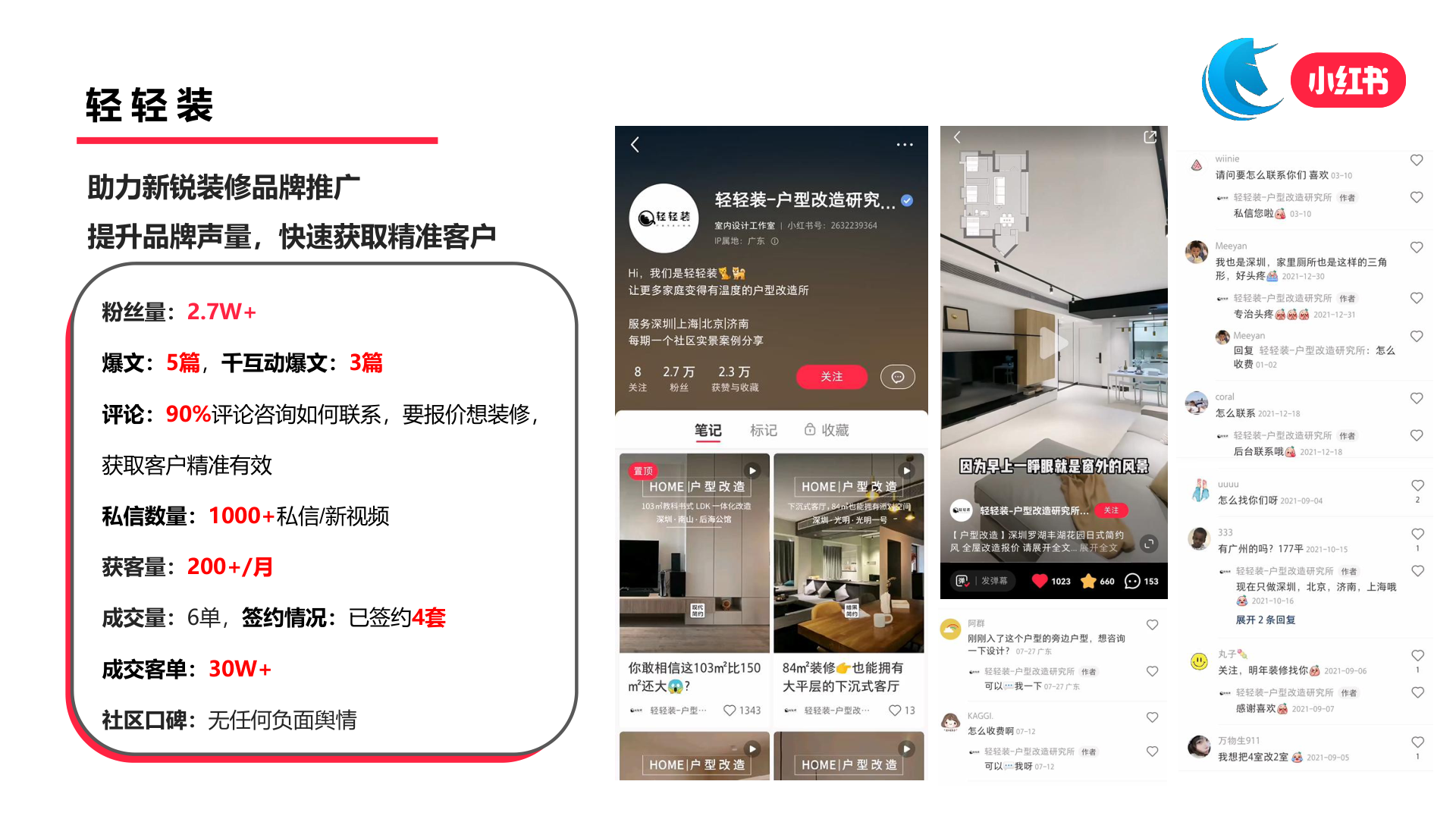
Qingqingzhuang · Xiaohongshu Managed Operations
End-to-end Xiaohongshu content operations generated high-intent enquiries at scale in the comments and delivered steady monthly customer acquisition and sales.
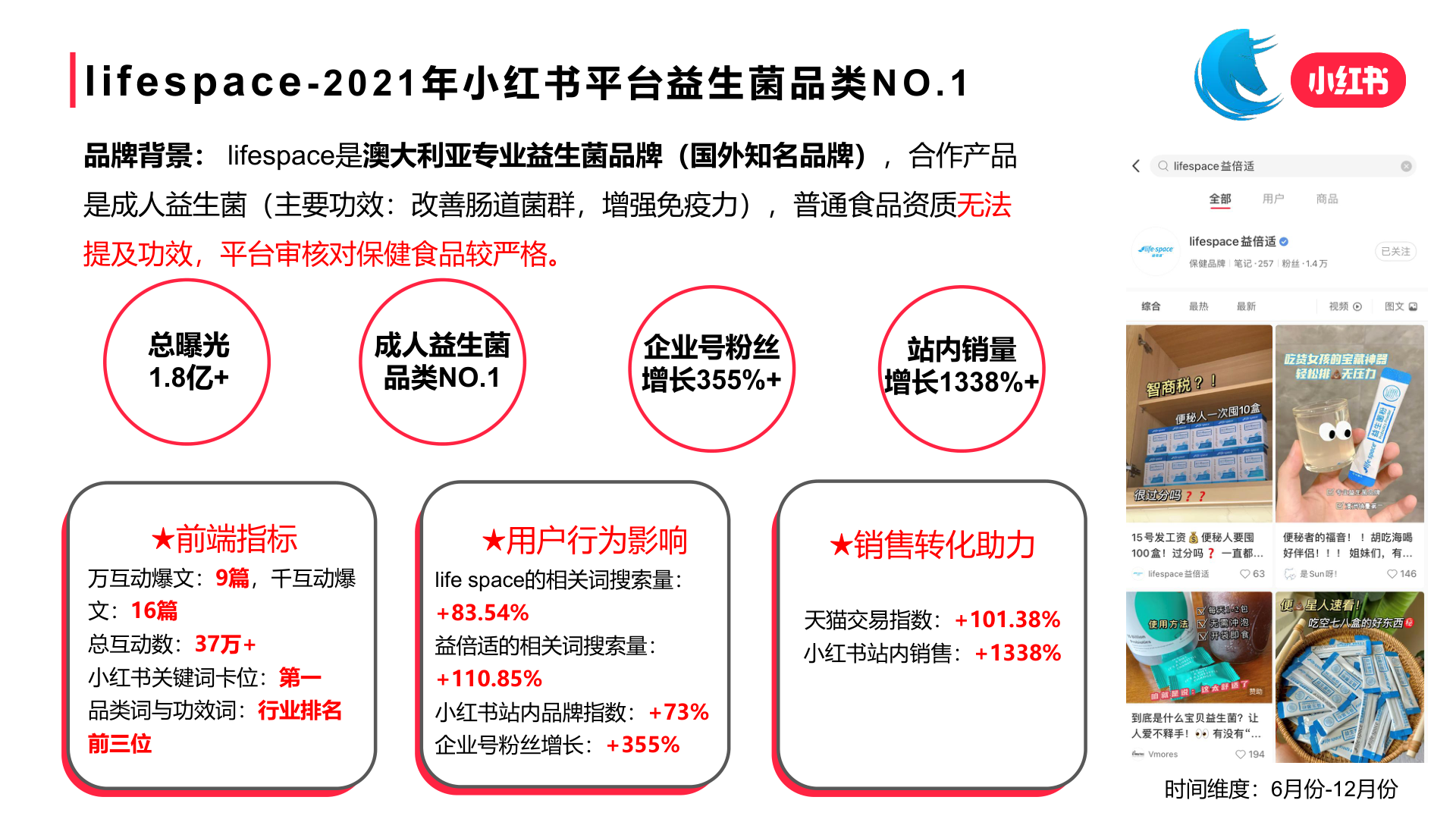
Lifespace Probiotics · No. 1 in Its Xiaohongshu Category
Full-service Xiaohongshu operations helped the probiotic brand reach No. 1 in its category while growing both branded-keyword visibility and in-platform sales.

Tencent Licaitong · Full-Service Xiaohongshu Campaign Marketing
A dual-track campaign around key financial-planning moments delivered a breakout-post rate far above the industry average and built a content-seeding presence for a mass-market wealth-management product.
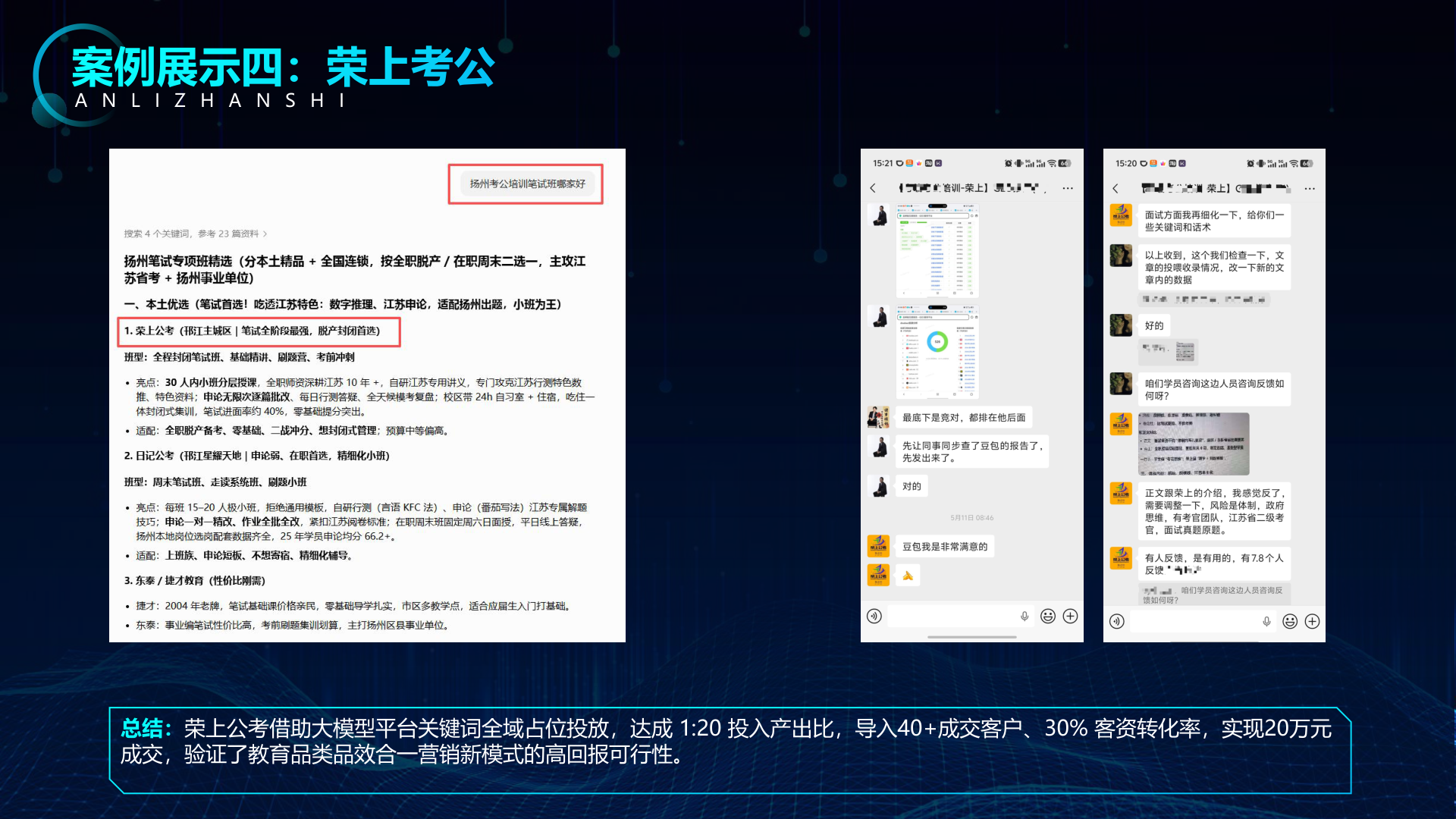
Rongshang Civil Service Exam Training · Full-Spectrum LLM Keyword Coverage
Full-spectrum GEO keyword placement secured traffic entry points across LLM platforms and traditional search, attracting high-intent local leads.