
*GongBan AI Team | Shenzhen | Reading Time: Approximately 8 Minutes*
The most worthwhile investment for gaining customers on Xiaohongshu is to focus on search keyword content positioning rather than chasing trending posts on the recommendation page. A search-oriented note can remain in search results for several months or even more than a year, bringing in precise visitors every day—this is the most certain bonus in Xiaohongshu's 2026 traffic logic.
Consider some public data: Xiaohongshu's monthly active users have reached 350 million, with over 280 million using the search function monthly, and the daily average search requests are close to 800 million. 70% of users will "search before they buy" (source at the end of the article). More crucially, the efficiency difference is significant: industry data shows that the conversion efficiency of search traffic is more than three times that of recommendation traffic—because search users come with clear intent.
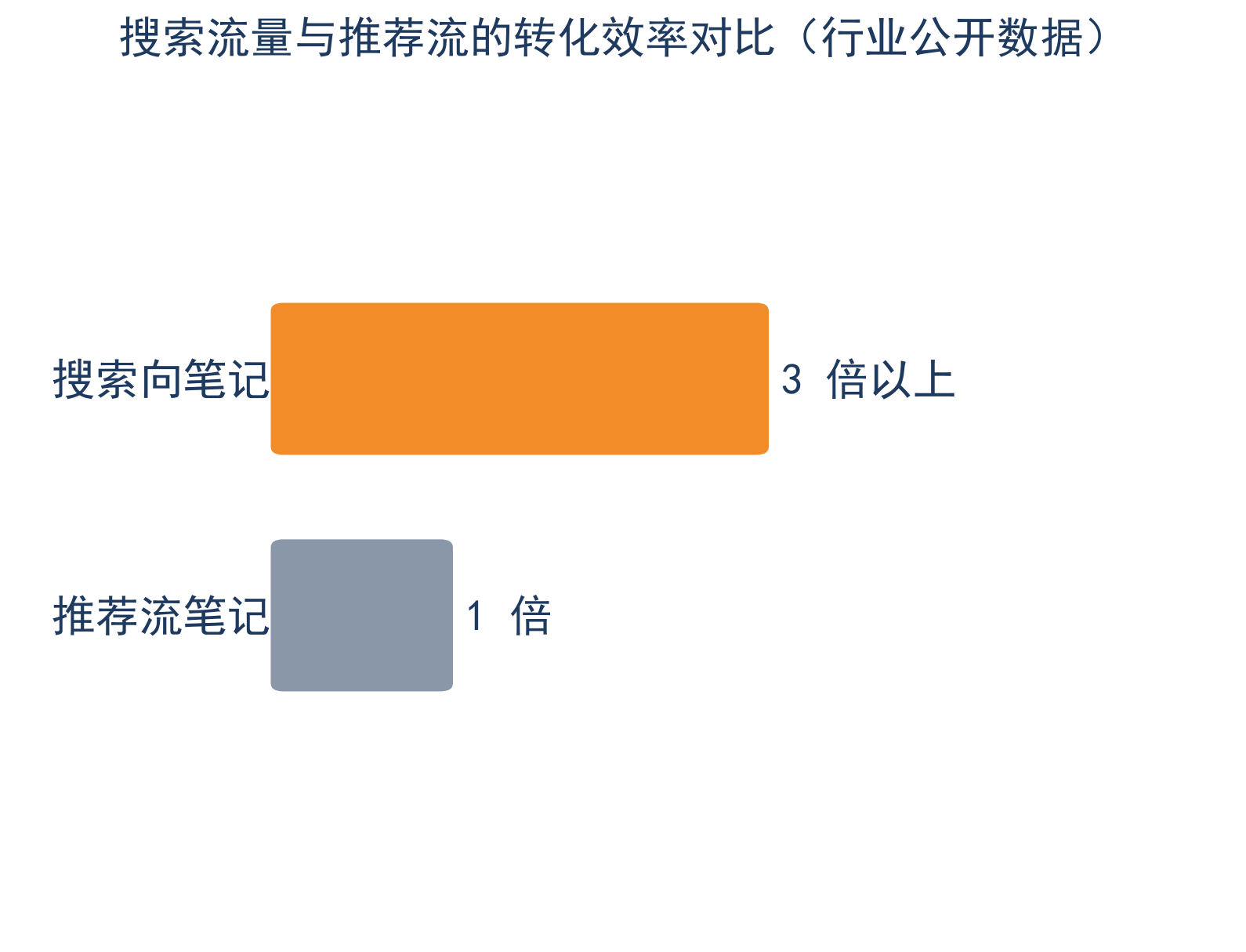
This article clarifies four key points: which four types of keywords are most worth focusing on, how to embed keywords in your notes, a directly applicable topic selection method, and the limitations of this strategy.
1. Which Four Types of Keywords Are Most Worth Doing?
Problem-based, comparison-based, scenario-based, and pitfall-avoidance. These correspond to different decision-making stages of search users, with the following value ranking:
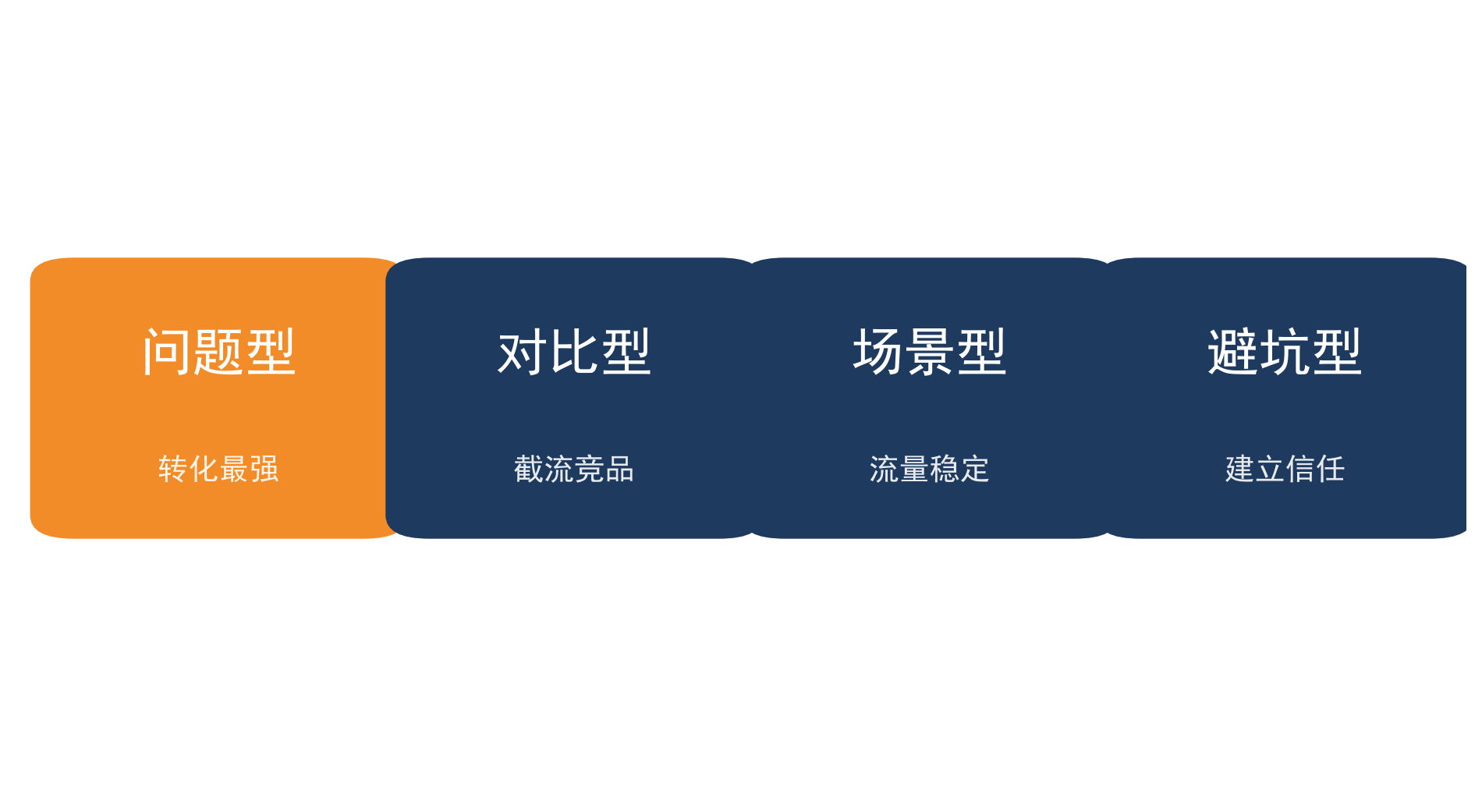
- Problem-based keywords (highest conversion): Users search with pain points, indicating the highest purchase intent. For example, "how to choose a dishwasher" or "which XX service is reliable."
- Comparison-based keywords (best for intercepting competitors): Users are in the brand comparison stage and are about to make a purchase. For example, "differences between XX and YY" or "how to choose between imported and domestic."
- Scenario-based keywords (stable traffic): Tied to festivals, seasons, or daily necessities, traffic is predictable. For example, "back-to-school stationery list" or "summer storage."
- Pitfall-avoidance keywords (easiest to build trust): Solve users' biggest anxieties, with the highest collection and forwarding rates. For example, "XX pitfalls" or "how to distinguish XX authenticity."
There is a repeatedly verified case: a home appliance brand posted 30 answer-based notes around problem-based keywords like "how to choose a dishwasher." Six months later, five of the top search results for this keyword were from this brand, and the natural inquiries brought by search accounted for more than 40% of all inquiries (source: Red Ren Guan Operation Column, see at the end of the article).
2. How to Embed Keywords in Notes?
Three positions must embed keywords, and one position should be avoided.
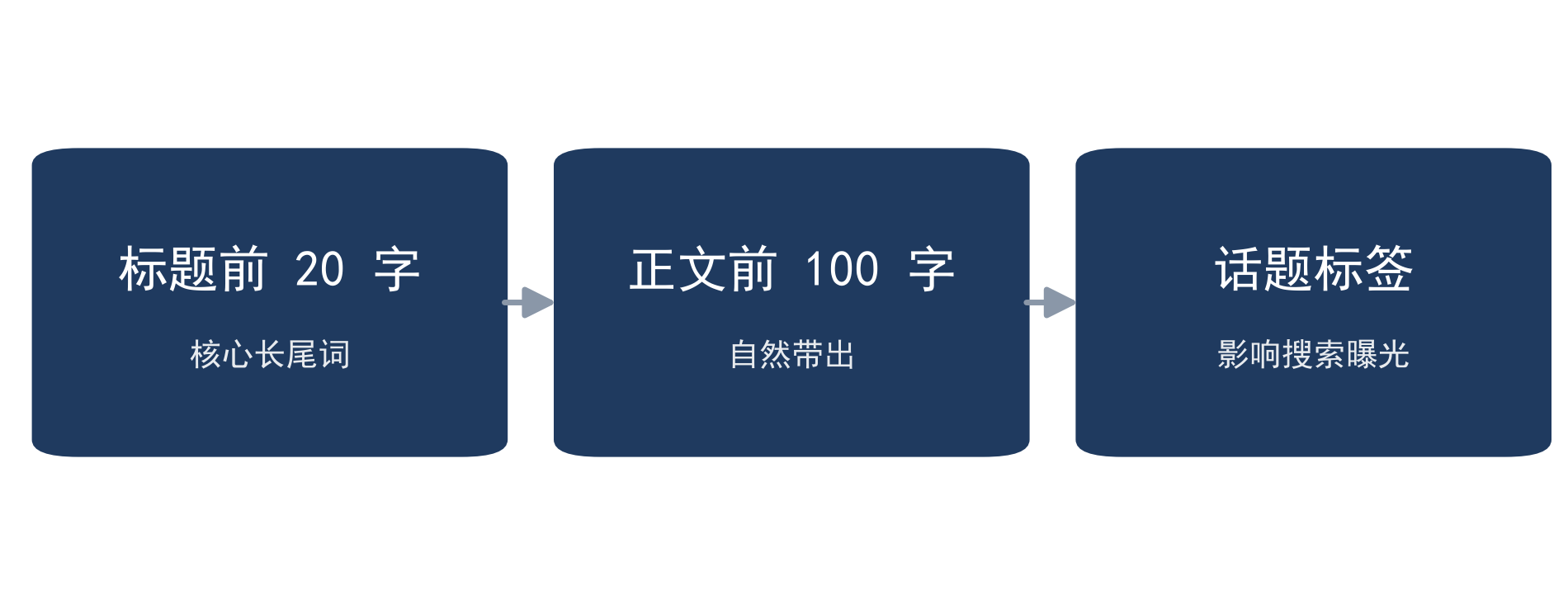
- First 20 characters of the title: Must include the core long-tail keyword. Search matching and user clicks depend on this.
- First 100 words of the text: Naturally incorporate the keyword once, do not stack—stacking will trigger implicit traffic restrictions.
- Topic tags: Choose topics consistent with the keywords, directly affecting search exposure.
- Position to avoid: Brushing words in the comment area, filling images with text watermarks. These actions are either ineffective or will lead to downgrading.
Industry data also suggests a counterintuitive point: Xiaohongshu allocates more than half of its traffic to accounts with less than a thousand followers every day. Low-follower accounts are closer to users and have stronger trust. Search positioning does not require growing a large account first; new accounts can directly start with long-tail keywords.
3. A Directly Applicable Topic Selection Method
Three steps, each taking 30 minutes:
- Keyword Extraction: Open the Xiaohongshu search box, enter your core product term, and note all the drop-down suggestion words; then look at the titles and tags of high-interaction notes from competitors; finally, organize the real customer questions received by customer service/sales. These three sources combined form your most realistic keyword library.
- Classification: Categorize the words into "problem-based/comparison-based/scenario-based/pitfall-avoidance" and prioritize problem-based and comparison-based ones.
- Write Answer-Based Notes: Each article answers only one search term. The structure should follow "scenario entry—pain point breakdown—provide solution—summary advice," and the main text should be genuine and informative. Pure advertising notes will not be ranked by the algorithm.
For topic selection and draft writing, you can use WorkBuddy to set up a workflow of "keyword library → answer-based note draft → manual review and publish," reducing the production time of each article by more than half. However, the judgment and fact-checking of the keyword library must be done by humans—AI does not understand your customers' real pain points, but you do.
4. What This Strategy Cannot Do
Let's be clear about the limitations:
- Search positioning does not solve the problem of "no demand for the product." If no one is searching for your category on the platform, first address the positioning, don't start with content.
- Results are not seen in a week. Search notes usually take 2–4 weeks to start ranking in the top positions, and keyword deployment should be planned quarterly.
- Traffic diversion has red lines. The platform strictly controls traffic diversion. Use stores, fan groups, and official tools to legally receive traffic. Directly giving out a WeChat ID is suicide.
- Don't touch popular big keywords. Keywords like "skincare" and "fashion" have extremely high competition, and small accounts cannot compete for rankings. The real conversion drivers are long-tail keywords.
The core logic of Xiaohongshu operations in 2026 can be summed up in one sentence: Don't chase trending posts, occupy positions in search results. If you want to know which search terms are worth targeting for your category on Xiaohongshu, you can book a free enterprise AI diagnosis with GongBan AI.
Related Reading
- [Article/Xiaohongshu Content Playbook](/en/article/xiaohongshu-content-playbook.html)
- [Article/Xiaohongshu Matrix Workflow](/en/article/xiaohongshu-matrix-workflow.html)
- [Article/Workbuddy Luohu Ai Workshop](/en/article/workbuddy-luohu-ai-workshop.html)
References
- Jizhile Data "How to Promote and Attract Traffic on Xiaohongshu? 2026 Five Practical Paths Full Guide", https://www.jzl.com/news/xhs-ops-3, 2026
- UnionUnique Universe Kinetic Energy "Search Positioning: Occupying the Search Entrance is the Core of Xiaohongshu Customer Acquisition", https://xiaohongshu.unionunique.cc/2026/08/21/search, 2026-08-21
- Red Ren Guan "Why is Xiaohongshu Operations Getting Harder? 2026 Latest Algorithm Interpretation and Breakthrough Strategy", https://www.redtask.cn/archives/2111.html, 2026
*Note: Platform data is quoted from industry service provider public articles. It is recommended to check against Xiaohongshu's official commercial materials before publication. Tool function information is current as of October 2026.*