
*GongBan AI Team | Shenzhen | Reading Time: About 8 Minutes*
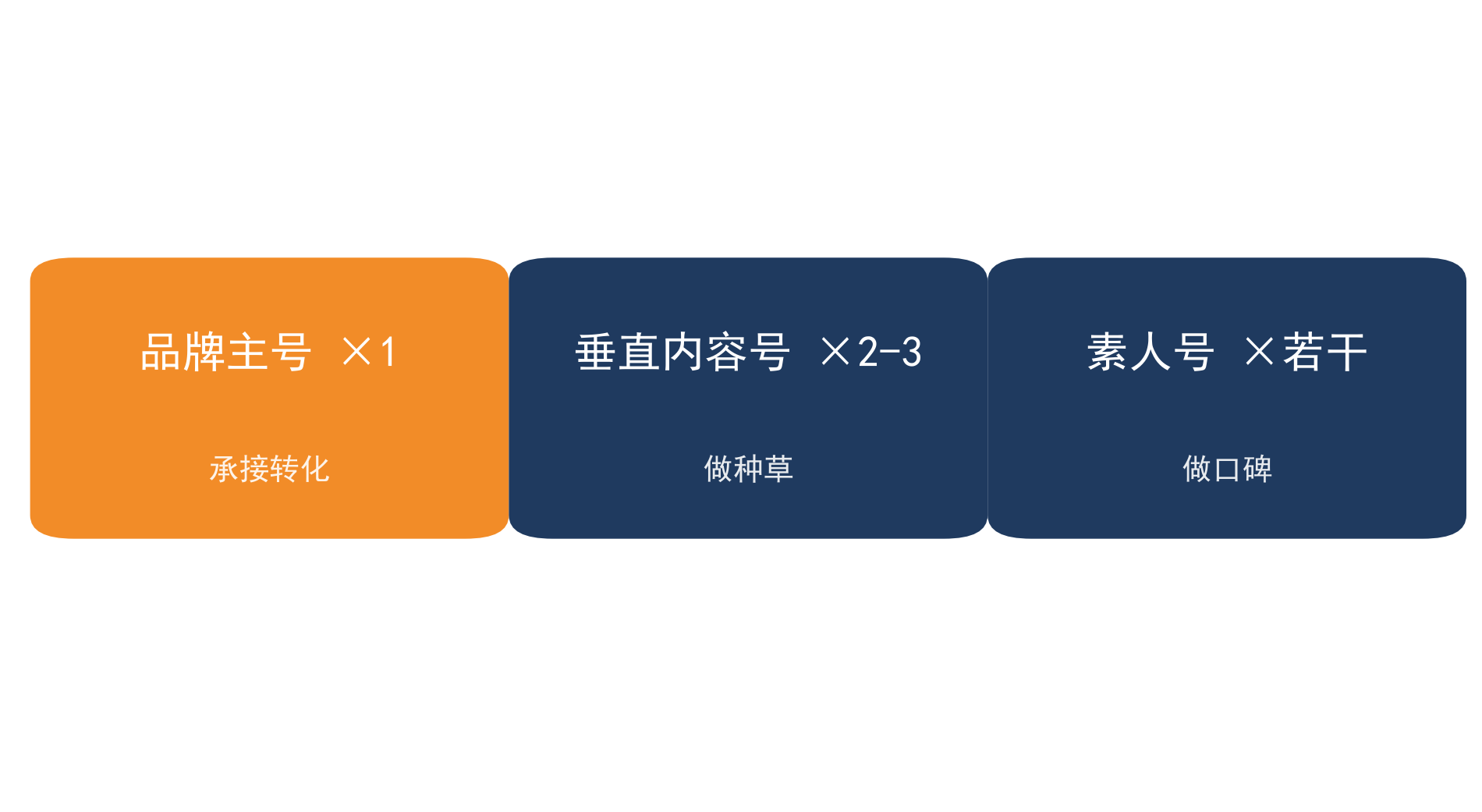
The correct way to build a Xiaohongshu matrix account: 1 main brand account for conversion, 2–3 vertical content accounts for product seeding, and several grassroots accounts for word-of-mouth—while using an "AI-generated draft, manual review, scheduled publishing" workflow to solve production capacity and employing differentiated personas to avoid competing with yourself for traffic.
Why build a matrix in 2026? The ceiling for single accounts is becoming increasingly apparent. Industry data shows that Xiaohongshu allocates over half of its traffic to creators with less than a thousand followers daily, providing small accounts with a chance for a cold start. However, the exposure and risk resistance of a single account are limited. An operational review mentioned a reference case: a pet brand used a "1 main account + 3 category accounts + 10 grassroots accounts" matrix, and within six months, the brand's search volume increased by about 9 times, and the restriction of a single account did not affect the overall operation (source at the end of the article; the case comes from a public review by an industry practitioner, not a project we handled).
This article covers four things: the division of labor for each account in the matrix, how to set up an AI workflow, how to avoid triggering restrictions, and how long it takes to see results.
1. What is the division of labor for each account in the matrix?
The main account handles conversion, vertical accounts handle product seeding, and grassroots accounts handle word-of-mouth. This is the general principle of division of labor:
- Brand Main Account ×1: Hosts the store and official components, handling all conversions. Content is mainly based on case studies and product Q&A—case study content typically has lower interaction but extremely high user precision.
- Vertical Content Accounts ×2–3: Each account focuses on one content direction (for example, one for practical tutorials, one for scenario reviews), directing traffic to the main account for product seeding.
- Grassroots Accounts ×Several: Create word-of-mouth content using a real user tone, supporting search positioning and spreading long-tail keywords.
The key is differentiation: each account's persona, content direction, and visual style must be distinct; otherwise, the algorithm will identify them as the same source, leading to internal competition for traffic. This is also the primary reason why most matrix strategies fail—not because there aren't enough accounts, but because the accounts all look the same.
2. How to set up an AI workflow?
The biggest cost of a matrix is production capacity: one account producing three posts a week means 15 posts for five accounts, which is unrealistic to rely solely on human writing. Our approach is to break down the production process into a workflow:
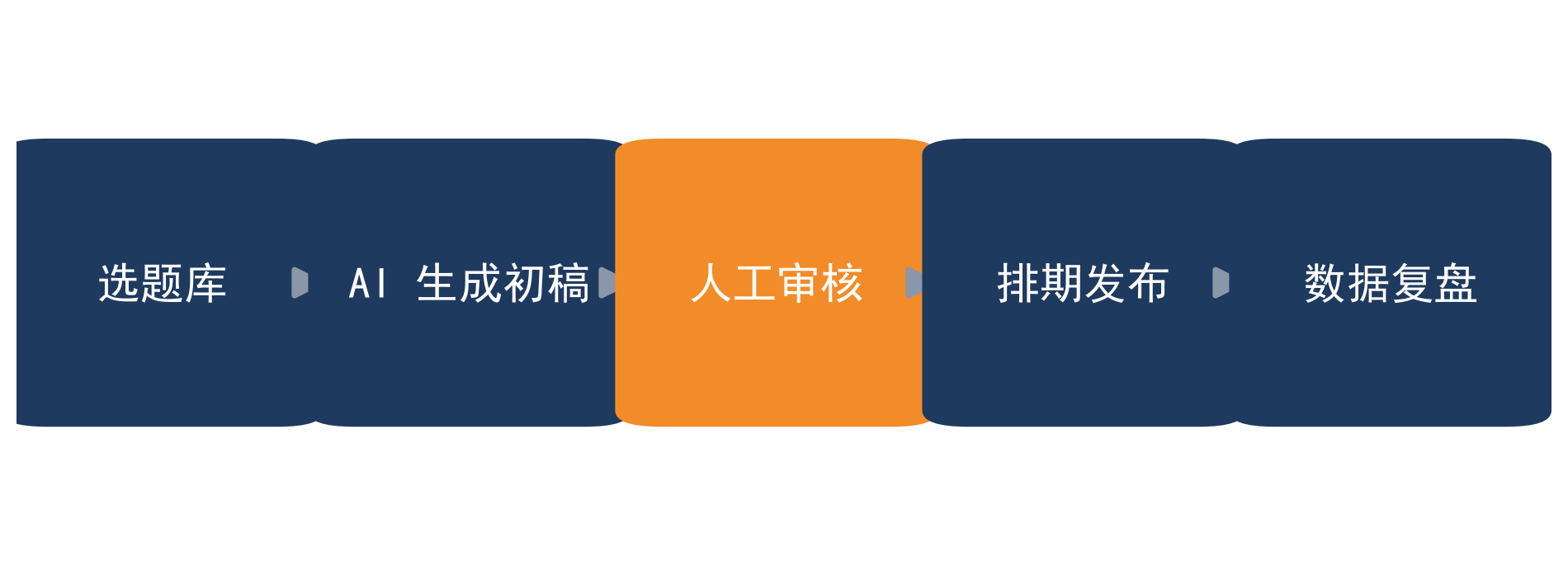
- Topic Library: Compile a keyword library from search suggestions, high-interaction competitor posts, and real customer questions, categorizing them into "question-based/contrast-based/scenario-based/troubleshooting-based." Each account is assigned different categories of keywords to naturally avoid topic duplication.
- AI-Generated Draft: Feed the selected topics, product information, target audience, and output requirements into WorkBuddy, allowing it to generate a draft and suggest accompanying images based on the structure of "scenario entry—pain point breakdown—solution provision—summary." WorkBuddy is a Tencent intelligent product; we provide WorkBuddy training and implementation to help enterprises streamline this process.
- Manual Review: Fact-checking (AI-generated product parameters must be corrected), persona tone proofreading, and platform compliance checks. This step cannot be skipped; only reviewed content enters the publishing queue.
- Scheduled Publishing: Use a scheduling table to turn the question of "whether to publish" into a calendar action. Industry reviews suggest that a one-week hiatus will cause the account's weight to start climbing again—matrix accounts fear intermittent publishing the most.
- Data Review: Weekly review of which keywords' posts have entered the top search rankings, and feed effective topics back into the topic library.
Once this process is streamlined, the marginal production time for content can be reduced by about half, allowing human effort to focus on review and strategy.
3. Which red lines, if crossed, will lead to restrictions?
Three pitfalls of the matrix strategy, plus three red lines of platform rules:
- One device, one network, one account. Frequent switching of multiple accounts on the same device and Wi-Fi is the first signal for the platform to identify a marketing matrix.
- Don't copy and paste content. If the text between accounts is too similar, it will be flagged as content duplication. While drafts can share materials, the final version must be rewritten according to the persona.
- Use compliant channels for traffic diversion. Use stores, fan groups, and official private messaging components to handle traffic; posting WeChat IDs in the comments is a surefire way to get the entire matrix banned.
- Don't let AI traces go unchecked. AI-generated content often has a template-like flavor; posting it directly will lower interaction rates, which in turn affects search rankings—so manual review is both a compliance and an effectiveness measure.
4. How long does it take to see results? Let's clarify what can't be done
- Time to see results: With a production pace of 10–15 posts per week, it usually takes 4–8 weeks to see search terms start to appear in the top rankings, and about 3 months for the brand's search volume to show significant changes. Service providers who promise "one-week growth" should be excluded.
- What can't be done: The matrix solves production capacity and positioning issues but cannot solve the problem of a product lacking real demand; the "authenticity" of grassroots accounts must be based on real user experiences. Arranging grassroots accounts to fabricate usage experiences constitutes false advertising; we do not accept such requests.
- Cost reminder: The minimum configuration of five accounts requires at least one content manager + part-time contributors from various departments; it is difficult for purely outsourced content to pass the "authenticity" test.
The essence of the matrix is division of labor, not replication: each account has its own role, and humans only do what machines cannot. If you want to know how to configure a matrix for your product category and which keywords are worth spreading, you can book a free enterprise AI diagnosis with GongBan AI.
Related Reading
- [Article/Xiaohongshu Search Keyword Guide](/en/article/xiaohongshu-search-keyword-guide.html)
- [Article/Xiaohongshu Content Playbook](/en/article/xiaohongshu-content-playbook.html)
- [Article/Workbuddy Enterprise Rollout 5 Steps 2](/en/article/workbuddy-enterprise-rollout-5-steps-2.html)
References
- Red Task, "Why is Xiaohongshu Operations Getting Harder? 2026 Latest Algorithm Interpretation and Breakthrough Strategy," https://www.redtask.cn/archives/2111.html, 2026 (Matrix Strategy, Pet Brand Case, Hiatus and Weight, Scheduling Table Method)
- Ultimate Data, "How to Promote and Direct Traffic on Xiaohongshu? 2026 Five Practical Paths Full Guide," https://www.jzl.com/news/xhs-ops-3, 2026 (Traffic Distribution for Accounts with Less Than a Thousand Followers, Precision of Case Content)
- WorkBuddy Product Capability Introduction, Tencent Official Website, https://www.codebuddy.cn/work (as of October 2026)
*Note: The data for the brand case in the article comes from a public review by an industry practitioner, not official statistics, and is for reference only.*