
GongBan AI Team | Shenzhen | About a 7-minute read
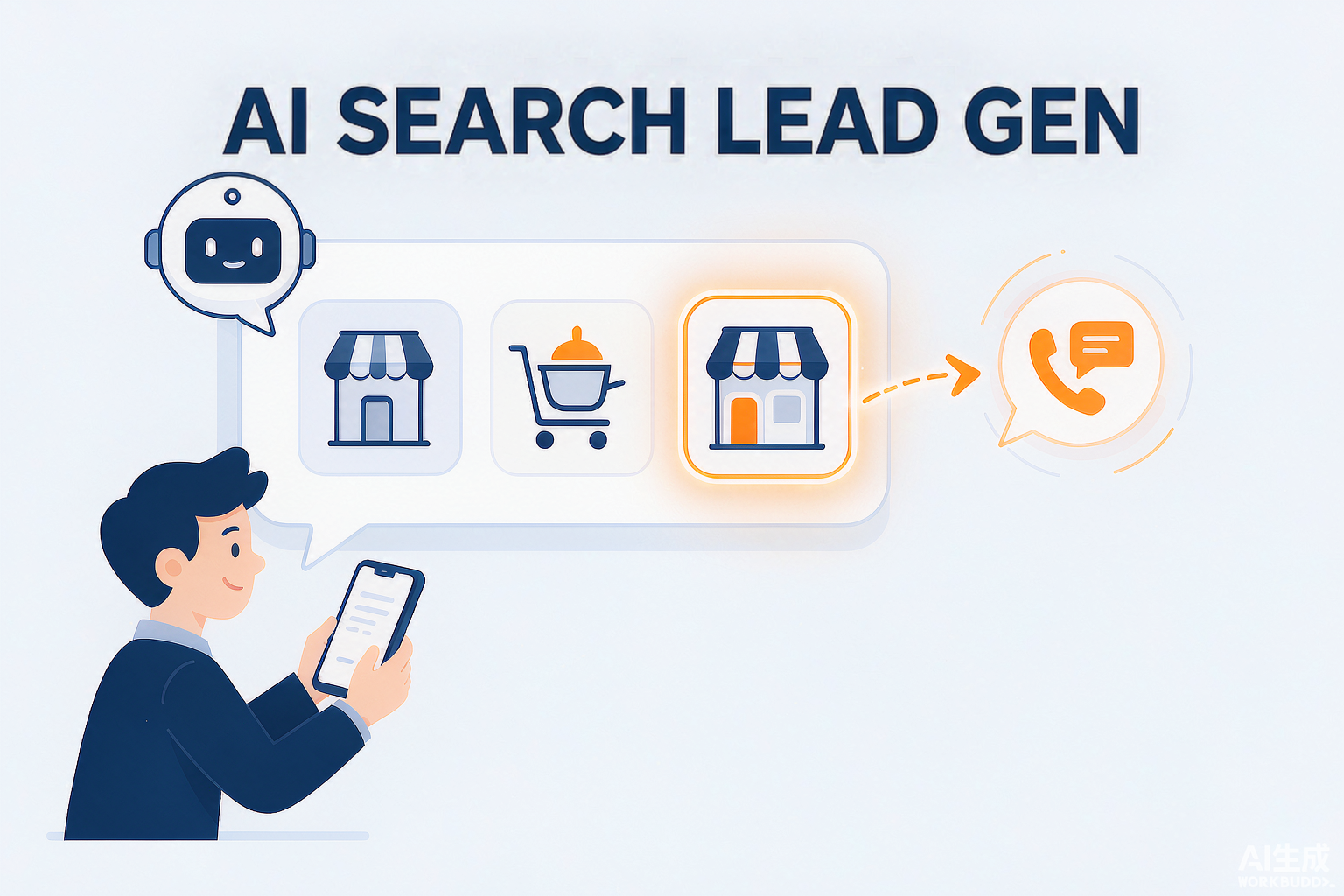
AI search lead generation means: when your potential customers ask AI assistants like Doubao, DeepSeek, or Tencent Yuanbao, your business shows up in the answer and gets named as a recommendation — the customer finds you through the AI's reply and reaches out on their own. That is a complete acquisition path. GongBan AI has run this playbook end to end in education and local services; this article explains how it works, the three-step method, and the results you can expect.
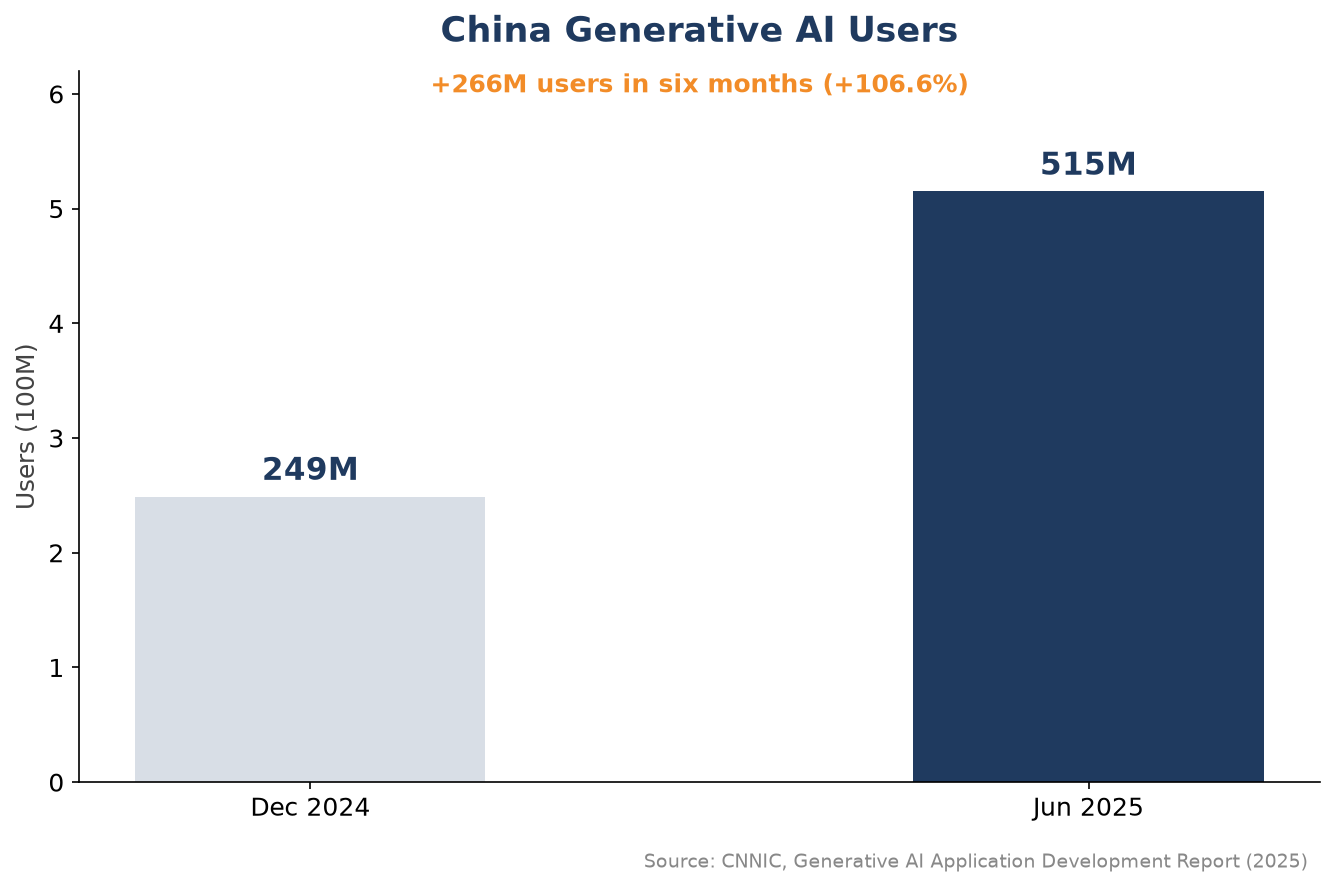
First, look at the size of the pond. According to the China Internet Network Information Center's Generative AI Application Development Report (2025), as of June 2025 China had 515 million generative AI users — a 36.5% penetration rate — and over 90% of users prefer domestic models. The people using Doubao, Yuanbao, and Ernie are the same people who buy from you.
How Customers "Find" You Through AI
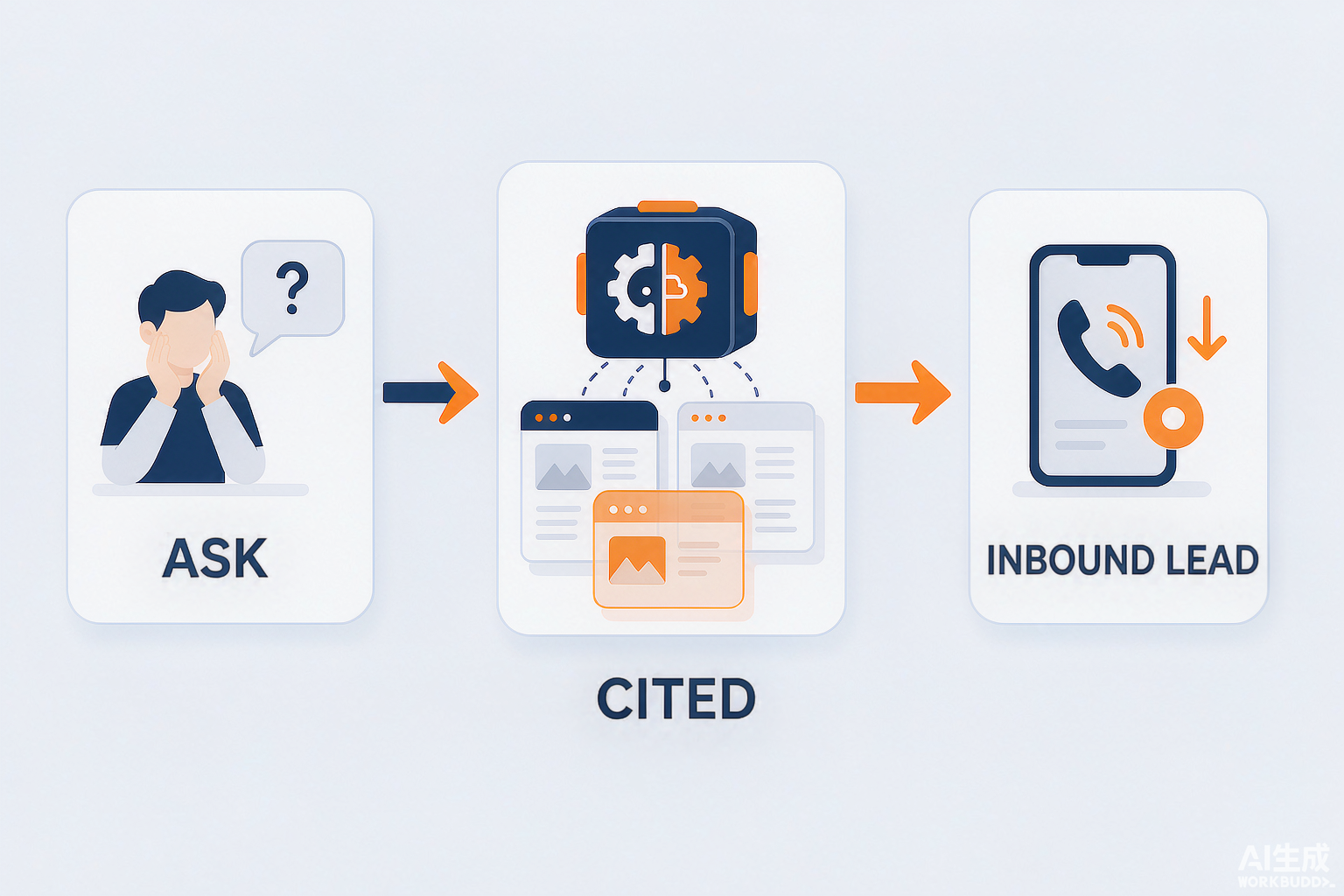
The one-sentence answer: the customer asks a specific question, the AI composes a reply from the web pages it has crawled, your brand gets cited in that reply, and the customer searches for you or reaches out directly.
Here is the full chain. A business owner in Shenzhen asks an AI, "Are there any companies that do enterprise AI training?" The AI does not recommend out of thin air — it answers based on its training data and web content retrieved in real time. If a company's website, case pages, and public content contain clear, specific, quotable information, the odds of being written into the answer rise sharply. Conversely, if a brand has never been "remembered" by these models, it simply does not exist in that purchasing decision.
In the traditional search era, customers browsed ten pages of results and you had ten spots to fight for. In the AI era, the customer reads a single answer — the entry point has shrunk from "ten blue links" to "one paragraph," and the number of brands appearing in that paragraph rarely exceeds three to five. The intensity of competition has changed, and so must the playbook.
The Three-Step Method
Step 1: Make yourself crawlable by AI. The technical foundation: body text present in the HTML source (AI crawlers mostly do not execute JavaScript), robots.txt allowing AI crawlers, and structured data in place. This step is pure engineering and can be done within two weeks, yet many polished websites fail right here.
Step 2: Give AI content worth citing. When citing, AI favors content that leads with conclusions, is dense with facts, and carries real numbers. "Serving many well-known clients" will never be cited; "ran site-wide search optimization for summer-camp businesses across 8 Pearl River Delta cities, generating 6–10 inbound inquiries per day" gets quoted verbatim. Case pages are the best vehicle: industry, region, method, and data come naturally together, and one page answers the specific question one type of customer asks.
Step 3: Plant answers to the questions customers actually ask. List the questions customers ask your sales team and turn each into content with a question-style headline: awareness (what is X), comparison (A or B, which is better), decision (which provider / how much for X), and local (where to find X in city Y). The fuller the coverage, the more chances of being synthesized into answers.
What Real Results Look Like
No pie in the sky — here is what our published cases show (data represents the respective projects only):
| Case | Method | Result |
|---|---|---|
| A postgraduate exam coaching company | LLM keyword coverage across platforms + traditional search, dual channel | 20:1 ROI, 40+ closed deals, 30% lead-to-deal conversion |
| A Pearl River Delta summer-camp brand | Site-wide search optimization covering 8 cities | A steady 6–10 inbound inquiries per day, 60%–80% inquiry conversion |
What both cases share: GEO was never the only channel — it was layered on top of existing ones. Traditional search rankings remain, and AI citations are pure incremental.
Timelines, Measurement, and Pitfalls
- Timeline: crawler behavior changes within 1–2 weeks of the technical fixes; stable citations generally start at 1–3 months; turning into leads depends on the industry — education and home renovation see noticeable results in 2–3 months.
- Measurement: ask every inbound lead "how did you find us," or tag traffic sources on landing pages. Customers from AI channels often volunteer it themselves: "I asked an AI and it mentioned you..."
- Three pitfalls: first, treating "AI mentions our brand" as a KPI — a mention outside the questions customers actually ask is worth nothing; second, expecting a one-time content push to last forever — citations decay without updates; third, buying services that "guarantee AI recommendations" — the way AI answers work means nobody can guarantee that, and anyone who does has a problem.
The essence of AI search lead generation is running a well-arranged showroom at the intersection your customers must pass: when they ask for directions, the AI is willing to point them to your showroom.
When customers ask AI, whether your name is in the answer decides who gets the lead. To find out what your customers are asking AI — and who the answer names today — book a free enterprise AI diagnosis from GongBan AI.
Further Reading
- What Is GEO? The New Customer Acquisition Gateway in the AI Search Era
- Junbo Summer Camp: Site-Wide Search Optimization Across 8 Pearl River Delta Cities (Case Study)
References
- China Internet Network Information Center (CNNIC), Generative AI Application Development Report (2025), 2025-10-18, https://www.cnnic.net.cn/n4/2025/1021/c88-11391.html
- GongBan AI case studies: Rongshang Civil Service Exam Prep — LLM keyword coverage across platforms, https://www.gongbanai.com/en/case/rongshang.html; Junbo Summer Camp — site-wide search optimization across 8 Pearl River Delta cities, https://www.gongbanai.com/en/case/junbo.html (data represents the respective projects only)